RECORDING
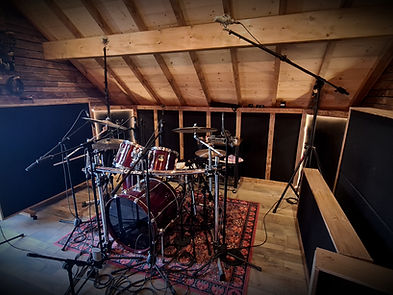
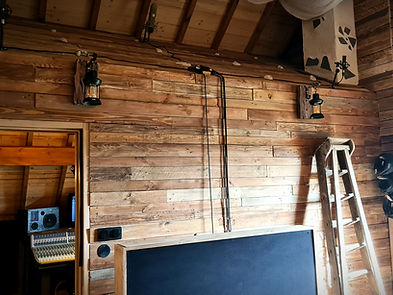
A studio often reflects the personality of the engineer behind the console. At RedBeard Studios, it’s all about a love for DIY. Nearly a hundred pallets have been dismantled with care, sanded with flair, and painted with zeal — giving the space its unique look and the warm, natural feel of wood.
Let’s be honest — the studio isn’t huge. But the high ceilings and its controlled natural reverb create the perfect environment to bring depth and character to your recordings.
And speaking of recording… In an age of lightning-fast tech advances and home studios becoming more accessible than ever — where anyone can own the same gear used on gold records — you might ask: Why go to a studio when you can do it all at home? Well, the sound engineer is often a musician too — maybe even a multi-instrumentalist. They may not be a virtuoso, but they know how to make things sound right. They know what will work live, because they’ve spent their life on the road — and if they’re not in the studio, they’re probably out touring.
But more importantly, a sound engineer has seen a lot of music pass through their hands. They can hear things the artist can’t — yet. They can see things the band may not. They’re a coach, a guide, a psychologist — sometimes a drill sergeant — and they serve only one master: the music god in front of them. They’re the ears that push you to your best performance — and that lift your music to the standards it needs to reach if it’s going to last.